
Building products using AI. Part 1
Social media gurus claim that by using AI in its state today, we can build a product from 0 to 1 with no coding experience. The reality of succeeding in that is a bit nuanced, though.

We have all seen posts on social media where someone with no coding experience claims that they have built their first product from scratch by leveraging artificial intelligence. Some even describe how they bootstrapped their product and are already getting customers. Of course, such posts get a lot of attention, and given the AI hype, it draws even more people to try it. It did me.

Why is it easy to start building with AI?
First, the entry point is straightforward. You just need an account on any of the platforms that have the required features: Replit, Claude Code, Lovable, to name a few. New accounts usually start with some quantity of free credits, which can give you a glimpse of what’s possible. As you can imagine, this hooked me up, and I started with Replit.
The available plans differ from tool to tool, but here’s how Replit’s pricing works.
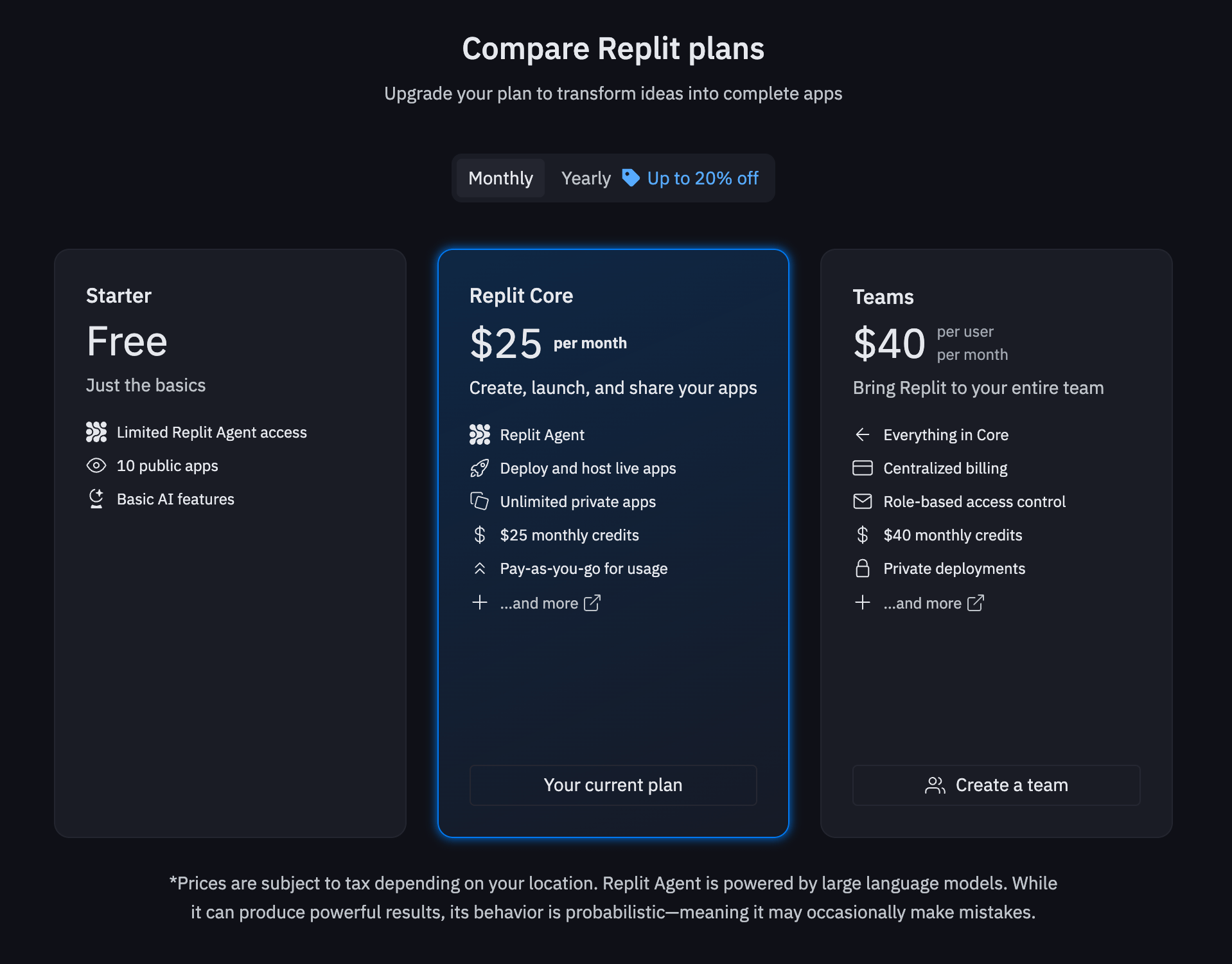
From here on, you need to specify what you want to build, and Replit does the work. It looks almost magical how your idea is coming to life in front of your eyes.
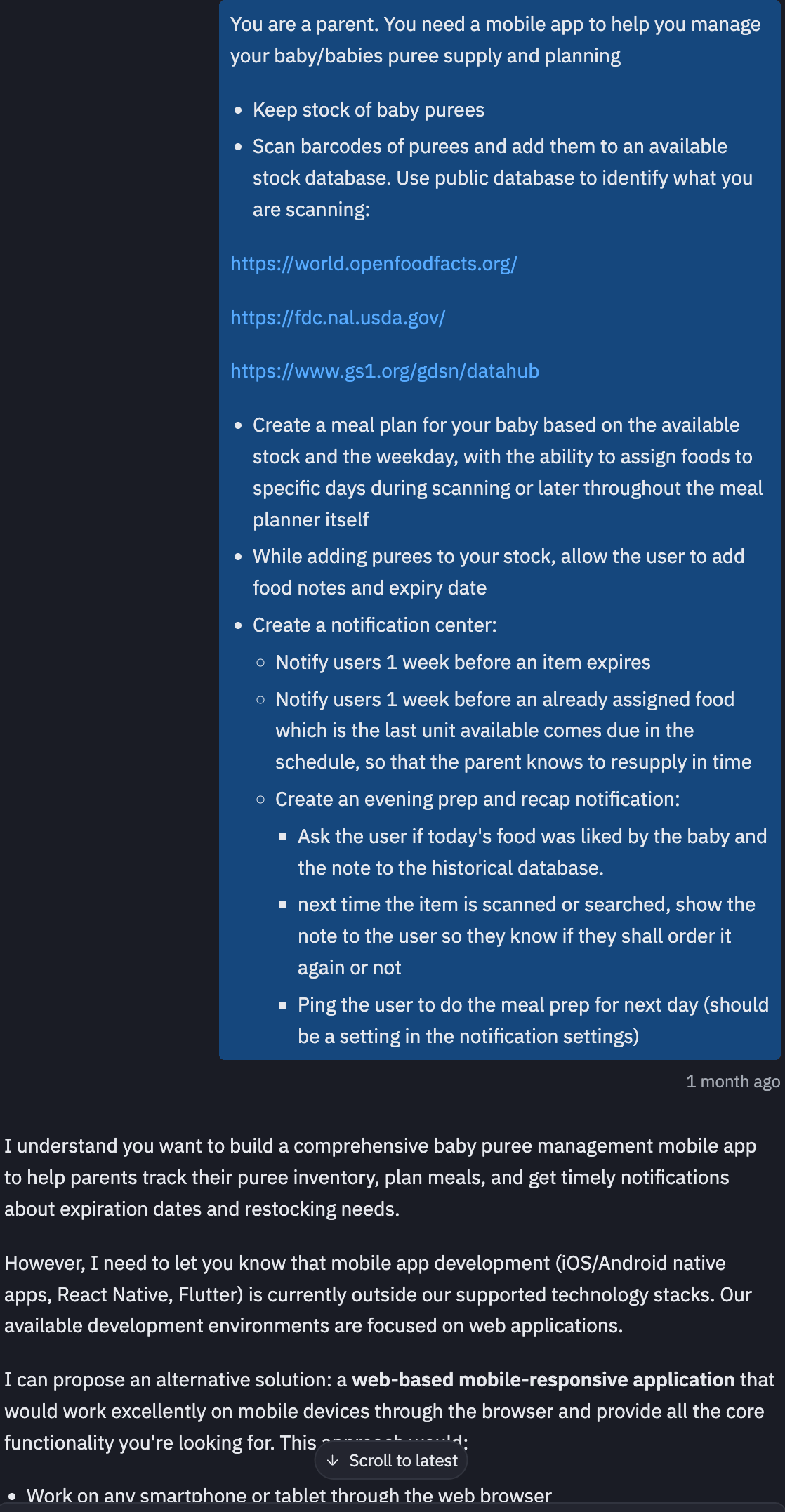
Next, I’ll share with you the final stage of where I went before the available credits on my account perished, and I was forced either to stop “vibe coding” or upgrade my account:
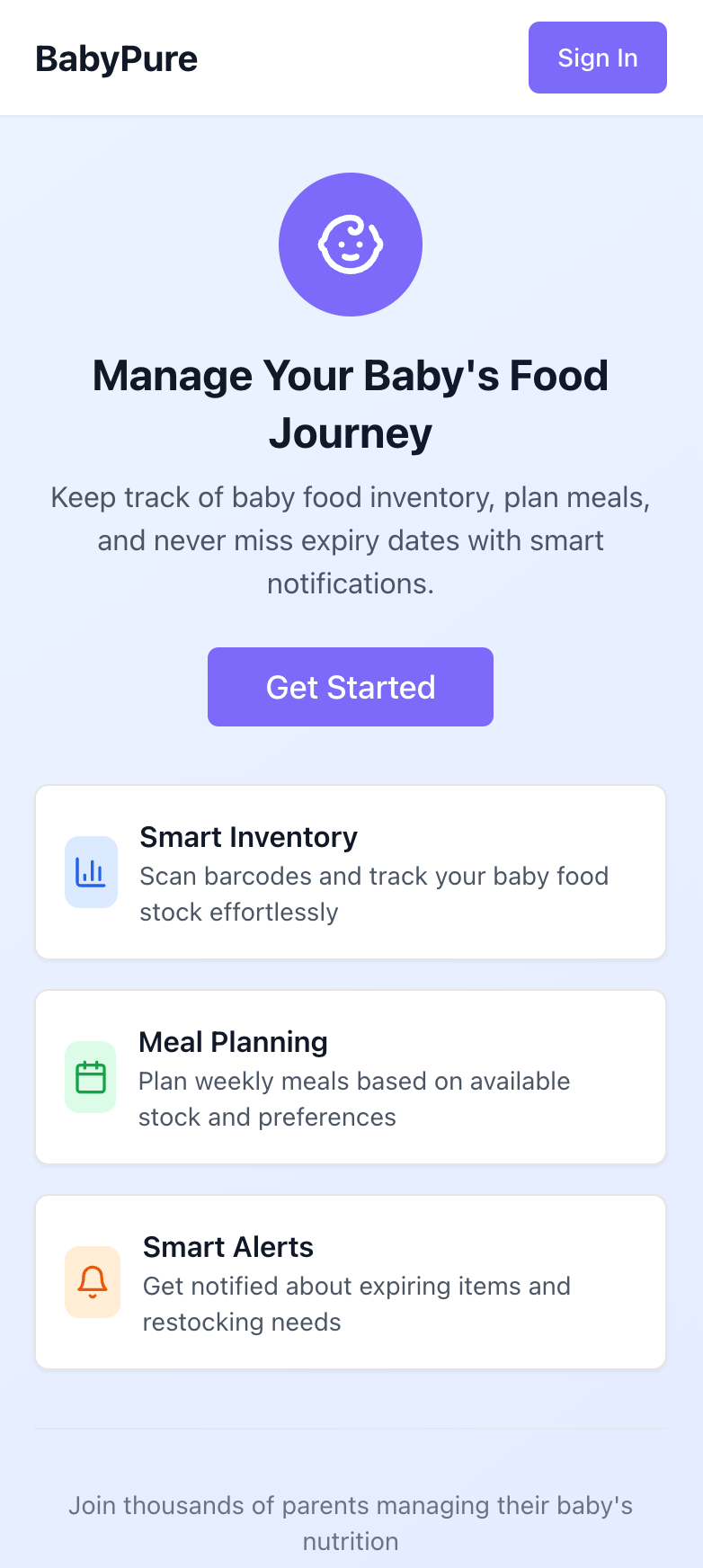
How much time and effort did it take me before I went from the first prompt and the final UI you see above? About 3-4 hours. Since I’m on paternity leave at the moment, I did most of that with a baby to take care of. I “vibe coded” on the beach while I was putting the baby to sleep, while she slept, then during lunch, while I played with her a bunch, etc.
As of effort, it’s not as hard as I imagine it would be if I were trying to write the code, create databases, figure out the UI, etc. After all, I was just writing plain text, while Replit interpreted what I asked it to do and then made the code changes itself. It often asked me for confirmation of its work, which was also cool.
“Vibe coding” a product is amazing, but it’s not as great as we wish
What you saw above was my second project out of 3 using Replit. I gave Loveable a try as well, but haven’t upgraded to a paid account, so my experience there is not as comprehensive as this one here. I’m saying this as context for what I will try to lay out going forward in this and the next post.
It’s very easy to build a product using vibe coding techniques and the available tools today. They are very good at understanding the context around your idea (as long as you give it to them), creating APIs, databases, services, etc. The great thing is that you see that idea slowly becoming alive and functioning. The tool understands what else it needs to create and set up for you, so that you have a functioning product at the end.
What’s not so great is that you would sometimes have to ask your AI agent to fix a bug, like a button/text overlap multiple times, and it still can’t get it right. Other times, a certain core feature that should be straightforward appears not to be that straightforward:


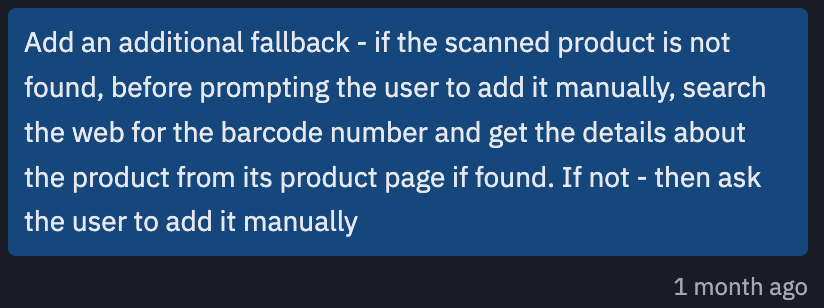
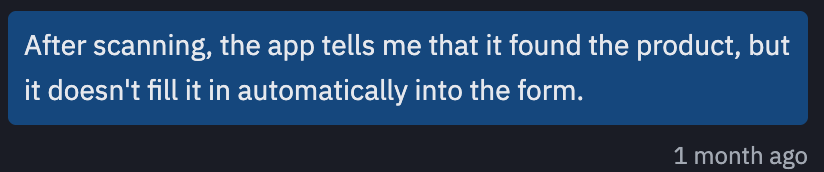
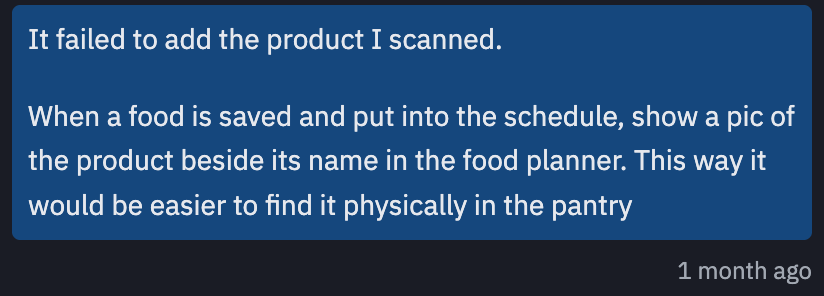
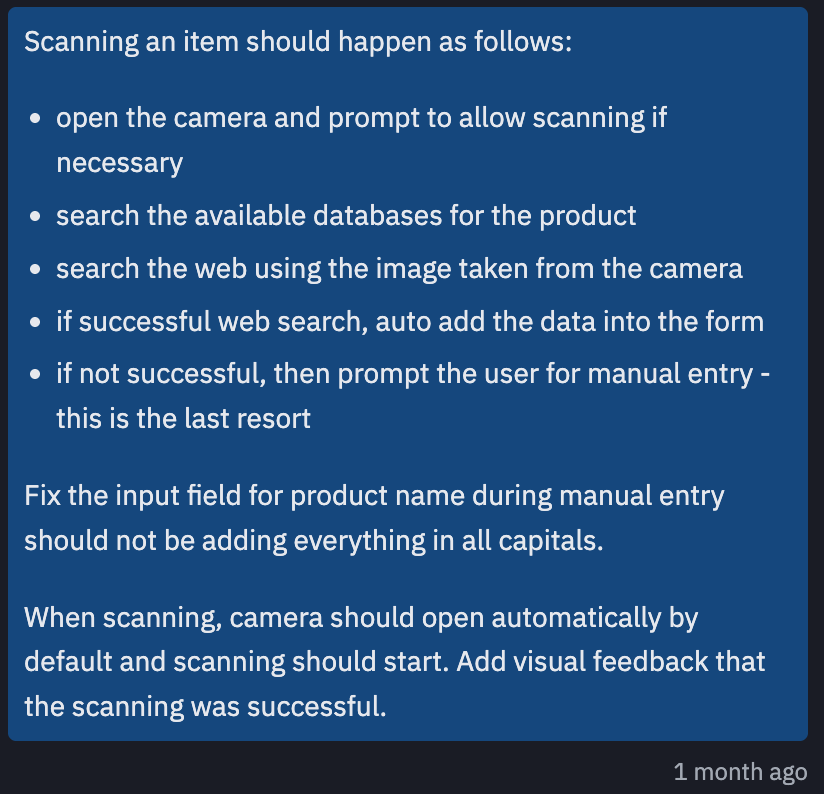
As you can see, here we have a total of 6 attempts, with a couple more that I haven’t included. After the 8th, apparently, I decided to move on and tackle another problem before returning to the barcode scanning of baby purees. This is in stark contrast to what some folks claim - “I used AI to create SaaS!”
Considering I can’t build a simple baby puree scanning app, I suppose it depends on the SaaS, right? In any case, the app that it has built for me is fairly functional - it has lots of working buttons, menu transitions, and the UI is looking crisp.
Building software products is not as straightforward as it seems
This is to serve as a counter to everyone with the mindset that software engineers will be becoming obsolete in 1-2-3 years. This is not happening, at least until these tools become marginally better at what they do. Yes, I might not have given it the most precise instructions, could have given it more context, etc.
But I’m a person with no coding experience. So, is this product for software engineers or for normies like me, who have ideas and want to build and ship them to customers? Employing such AI agents to build stuff is great, but what we’re building is not ready to ship. Or at least I don’t see myself bringing it to a state where I can ship it to even 1 client.
Sure, I spent only $15 on credits to build this, but then is the goal to bury $1000 so it becomes functional? Who can guarantee that it’s not going to be spaghetti code that a real software engineer would need to scrape and rewrite the entire codebase, so that it’s all functional and scalable? I suppose nobody, because this is not the core purpose of all of these AI agents. Or at least that is how it feels. I know, I know: when you build a business, you sometimes pour billions and even then you can fail.
Yes, I know that if I wanted my idea to be done the right way, I should’ve invested $20-30k in software engineers to build it. I totally agree with that statement, but we’re here to discuss the claim that AI can do that better/quicker/cheaper. We’re talking about the vast number of people who claim that leveraging such tools can help you build and ship products from 0 to 1 with no coding experience.
Building products using AI. Part 2

To build a product from 0 to 1 (in the traditional situation), you must go through a few basic steps. I will simplify for the sake of this post, but you would start with writing down your core idea, going through market and competition research, market fit, discovery, some prototyping and feedback collection, MVP, and then launch.
Truth be told, if we’re shipping a calculator app or a simple barcode scanner, then this can be done. But the App Store and Google Play are full of these since the dawn of time, so what value do we have in building yet another one? None.
So, what are AI agents good at?
Considering that we would have a hard time building and shipping a functioning product using AI, what can we do with it anyway? Although what I’ve described til this point may sound like AI agents are not worth it, this is totally not the case. There are several use cases where AI agents can save us time and money, so we can focus on building the right products for the right people.
Writing in plain English to an artificial intelligence agent can obviously result in a lot of value, but do we know how to realize that value? Do we know where and what that value is at all?
Since this topic is quite long, I decided it needs vol. 2, where I’ll give you my take on all of that from the perspective of a product manager with no coding experience.
If you are interested in reading more on the topic, don’t hesitate to subscribe, so you can get notified when the vol. 2 goes live!